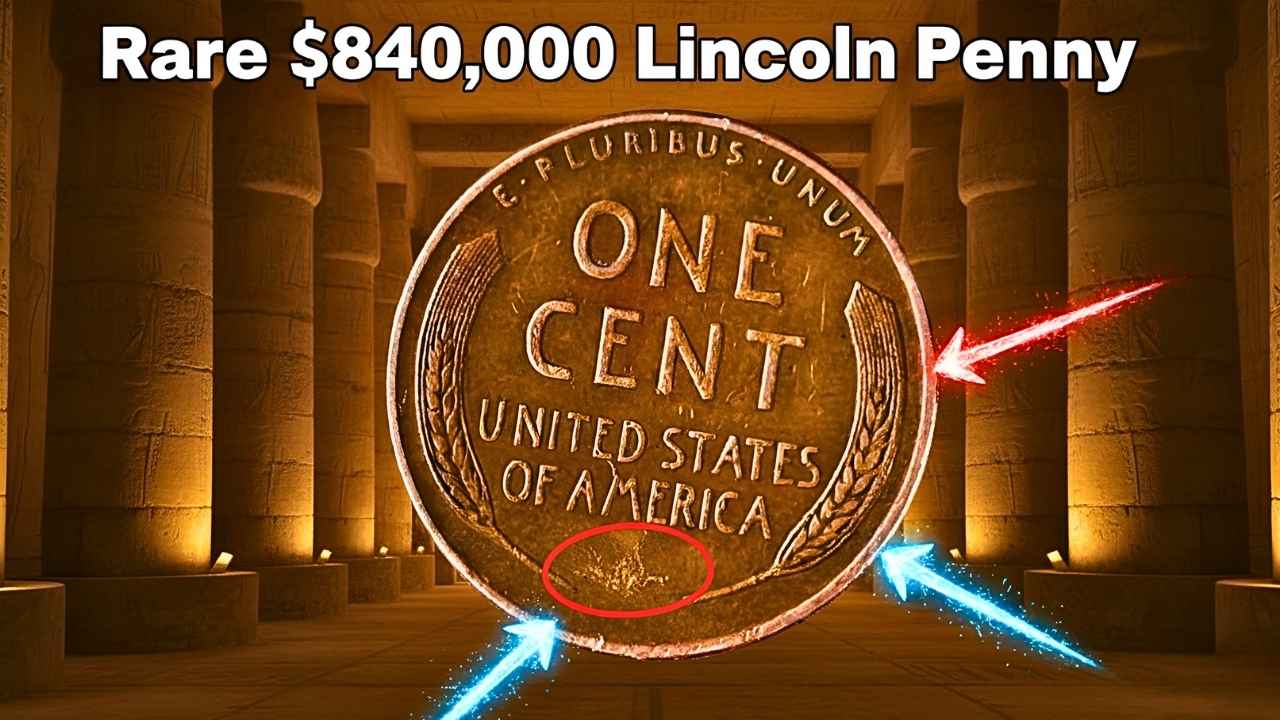
Rare $840,000 Lincoln Wheat Penny: The Lincoln Wheat Penny is one of the most iconic coins in American history. Minted from 1909 to 1958, it is a familiar sight to collectors and everyday people alike. While most of these pennies are worth only a few cents, a rare version has stunned collectors by selling for as much as 840,000 dollars. This astonishing value has sparked widespread curiosity and excitement, leading many people to carefully inspect their spare change in hopes of finding a hidden treasure. Understanding what makes certain Wheat Pennies so valuable is the first step toward recognizing one if it ever crosses your path.
Why Some Lincoln Wheat Pennies Are Worth a Fortune
The massive value of certain Lincoln Wheat Pennies comes down to rarity, condition, and historical circumstances. Coins that were produced in limited numbers, struck with errors, or made from unusual materials are highly sought after. In some cases, pennies that were never meant to exist ended up leaving the mint, making them incredibly rare today. When combined with excellent preservation, these factors can push a simple one cent coin into six figure territory.
The Famous 1943 Copper Lincoln Wheat Penny
One of the most valuable Wheat Pennies ever discovered is the 1943 copper penny. During World War Two, the United States Mint switched from copper to zinc coated steel to conserve copper for military use. However, a small number of copper blanks from 1942 were accidentally left in the presses and struck with the 1943 date. These copper pennies were never supposed to be made, which makes them exceptionally rare. Fewer than two dozen are believed to exist today, and pristine examples have sold for hundreds of thousands of dollars, with some reaching values near 840,000 dollars.
How to Check the Date and Mint Mark
The first thing to examine when looking for a rare Wheat Penny is the date. Pay close attention to key years such as 1909, 1914, 1922, 1931, and 1943. Next, look for the mint mark, which is a small letter located below the date on the front of the coin. A D represents Denver, an S represents San Francisco, and no letter indicates Philadelphia. Certain combinations, such as the 1909 S VDB or the 1914 D, are especially valuable due to low production numbers.

The Importance of Coin Errors
Minting errors play a major role in driving up the value of Lincoln Wheat Pennies. Errors can include double die strikes, off center designs, missing mint marks, or incorrect metal compositions. These mistakes were not always caught during production and some entered circulation. Because each error is unique or extremely limited, collectors are willing to pay a premium. A well documented error penny in good condition can be worth thousands or even hundreds of thousands of dollars.
How Condition Impacts Value
Condition is everything in the world of coin collecting. A Wheat Penny that looks worn, scratched, or damaged will be worth far less than one that appears nearly untouched. Coins are graded on a scale ranging from poor to mint state. Pennies that retain their original luster, sharp details, and minimal wear are far more desirable. Even a rare penny can lose much of its value if it has been cleaned or damaged, so it is important to handle potential finds carefully.
Simple Tests You Can Do at Home
There are a few easy ways to check whether a 1943 Wheat Penny might be valuable. One popular method is the magnet test. Steel pennies will stick to a magnet, while copper pennies will not. If you find a 1943 penny that does not stick to a magnet, it may be worth further investigation. Another test is weight. Copper pennies weigh about 3.11 grams, while steel pennies are lighter. These simple checks can help narrow down whether a coin deserves professional evaluation.
The Role of Professional Authentication
If you believe you have found a rare Lincoln Wheat Penny, the next step is professional authentication. Coin grading services specialize in verifying authenticity and assigning an official grade. This process protects both buyers and sellers and significantly increases a coin credibility and market value. Attempting to sell a high value coin without authentication can lead to skepticism and lower offers, so professional evaluation is a crucial step.
Stories of Ordinary People Finding Extraordinary Coins
One of the most exciting aspects of the Lincoln Wheat Penny story is that many valuable coins were found by ordinary people. Some were discovered in pocket change, old jars, or inherited collections that had been sitting untouched for decades. These stories fuel the belief that rare coins are still out there waiting to be found. While the odds are slim, they are not zero, which keeps collectors and casual searchers alike checking their change.
Why These Pennies Continue to Capture Public Attention
The idea that a single penny could be worth more than a luxury home is fascinating. It challenges assumptions about money and value and turns everyday objects into potential treasures. The Lincoln Wheat Penny also carries historical significance, representing a period of American resilience, innovation, and change. This combination of history, rarity, and financial reward ensures that interest in these coins remains strong year after year.
Final Thoughts on Spotting a Rare Lincoln Wheat Penny
Finding an 840,000 dollar Lincoln Wheat Penny is extremely rare, but knowing what to look for makes the hunt exciting and informed. By checking dates, mint marks, material, condition, and possible errors, anyone can participate in the search. Even if you never find a life changing coin, learning about these pennies offers a deeper appreciation for history and the hidden value that can exist in the smallest places. The next time you receive change, take a moment to look closely. You never know what might be waiting in your hand.