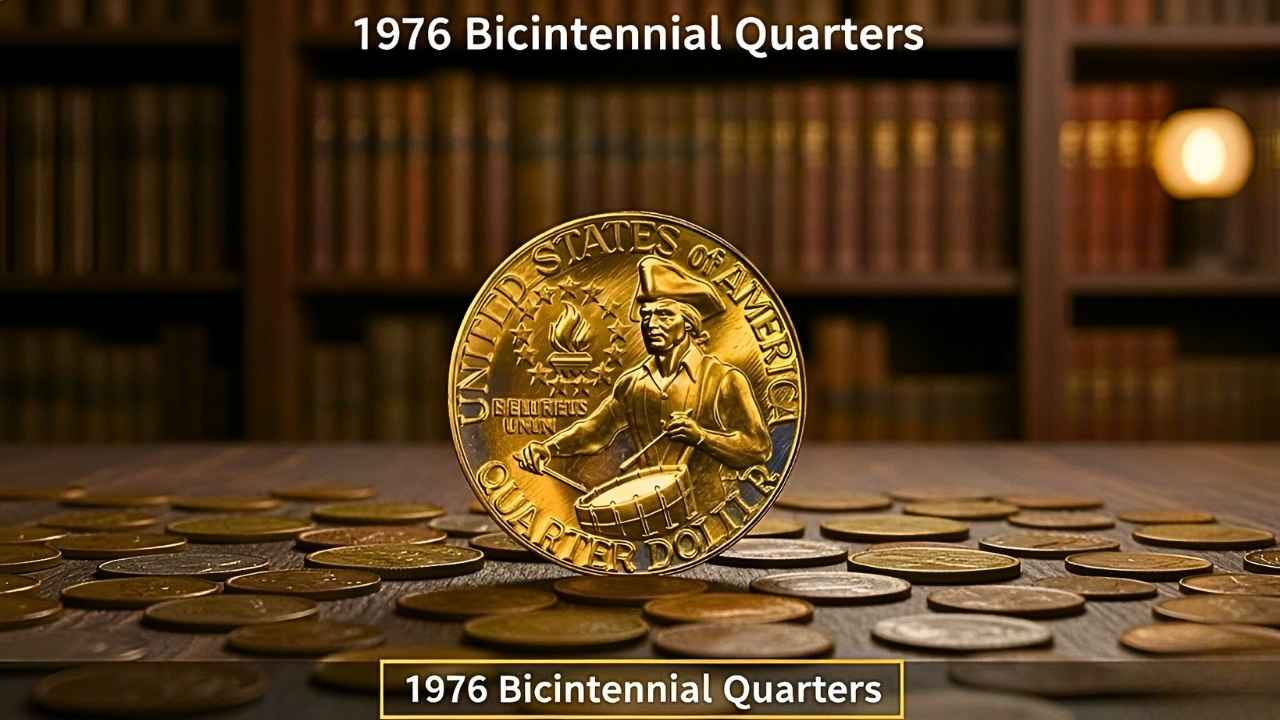
1976 Bicentennial Quarters: In 1976, the United States celebrated its Bicentennial, marking 200 years since the signing of the Declaration of Independence. To honor this historic occasion, the U.S. Mint released special commemorative coins, including the Bicentennial Quarter. Unlike the traditional Washington Quarter, these coins featured a unique reverse design created by Jack L. Ahr. The design showcased a colonial drummer with a torch of victory surrounded by thirteen stars, symbolizing the original colonies. This special edition quickly became a favorite among collectors and remains one of the most recognizable coins in American history.
Why The Bicentennial Quarter Stands Out
The Bicentennial Quarter is not just another coin in circulation. Its distinctive design and historical significance make it stand out from the rest. While millions were minted, certain variations and conditions have elevated some of these coins to extraordinary value. Collectors prize them not only for their beauty but also for the story they tell about America’s journey from independence to modern times.

The Rarity Factor
Although Bicentennial Quarters were produced in large numbers, rarity plays a crucial role in determining value. Coins struck in limited quantities, those with minting errors, or those preserved in pristine condition can be worth far more than their face value. For example, quarters minted in 40 percent silver for collectors are significantly more valuable than standard copper-nickel versions. Additionally, coins with unusual errors, such as double strikes or off-center designs, can fetch thousands of dollars at auction.
The Most Valuable Bicentennial Quarters
Some Bicentennial Quarters have reached astonishing values in the collector’s market. High-grade examples certified by professional grading services often sell for hundreds or even thousands of dollars. Rare silver proof versions, especially those in perfect condition, are among the most sought after. In certain cases, unique minting errors have propelled the value of a single Bicentennial Quarter into the tens of thousands. These coins are not only currency but also treasures that represent a piece of American heritage.

How To Identify Valuable Bicentennial Quarters
For collectors and enthusiasts, identifying valuable Bicentennial Quarters requires careful attention to detail. Key factors include:
- The mint mark, which indicates where the coin was produced. Coins from certain mints are rarer than others.
- The composition, with silver versions being more valuable than copper-nickel.
- The condition, as coins with minimal wear and sharp details are worth more.
- The presence of minting errors, which can dramatically increase value.
By examining these features, collectors can determine whether a Bicentennial Quarter is an ordinary coin or a hidden gem.

The Thrill Of Finding Rare Coins In Circulation
One of the most exciting aspects of coin collecting is the possibility of discovering rare coins in everyday circulation. Imagine receiving change at a store and spotting a Bicentennial Quarter with unique characteristics. While the odds are slim, stories of people stumbling upon valuable coins in their pocket change continue to inspire collectors. The idea that a coin worth thousands could be hiding in plain sight adds an element of adventure to daily life.
The Collector’s Market For Bicentennial Quarters
The numismatic market thrives on rarity and demand, and Bicentennial Quarters are no exception. Auctions often feature these coins, with collectors willing to pay significant sums for high-grade examples. The market value of Bicentennial Quarters has steadily increased over the years, reflecting their enduring popularity. For serious collectors, owning a rare Bicentennial Quarter is both a financial investment and a source of pride.

The Cultural Significance Of The Bicentennial Quarter
Beyond its monetary value, the Bicentennial Quarter carries immense cultural significance. It symbolizes America’s 200th anniversary and serves as a reminder of the nation’s journey from independence to modern times. The coin reflects the pride and patriotism of the era, capturing the spirit of celebration that marked the Bicentennial. For many, owning a Bicentennial Quarter is like holding a piece of history in their hands.
Preserving Bicentennial Quarters
Collectors often go to great lengths to preserve their coins. Proper storage is essential to maintain value, as exposure to air, moisture, and handling can cause damage. Coins are typically stored in protective cases or albums to prevent wear. For Bicentennial Quarters, preservation is especially important, as condition plays a major role in determining value. A well-preserved coin can be worth exponentially more than one that shows signs of wear.
The Psychology Of Coin Collecting
Coin collecting is not just about financial gain. It taps into deeper psychological motivations such as the thrill of discovery, the desire to preserve history, and the joy of owning something unique. For many collectors, the hunt itself is as rewarding as the find. The possibility of uncovering a rare Bicentennial Quarter fuels this passion, inspiring countless individuals to keep searching.
The Future Of Bicentennial Quarters
As time passes, the value of Bicentennial Quarters is likely to continue rising. Their historical significance and rarity ensure that they will remain highly sought after by collectors. Advances in technology have made it easier for collectors to connect, trade, and share knowledge, further fueling interest in these coins. The legend of the Bicentennial Quarter will undoubtedly inspire future generations of collectors, keeping the spirit of numismatics alive.
Conclusion
The tale of the 1976 Bicentennial Quarter is more than just a story of currency. It is a narrative that intertwines history, culture, and human curiosity. Whether the coin is worth a few dollars or thousands, its significance endures. For collectors and enthusiasts, it represents the ultimate dream, a reminder that treasures can be hidden in plain sight. The Bicentennial Quarter remains a symbol of legacy and possibility, proving that sometimes the most extraordinary discoveries are waiting right in our everyday lives.